Expressing Addition
Expressions of addition are used to add one statement to another. Some are followed by a noun while others are followed by a clause.
No products in the cart.


Expressions of addition are used to add one statement to another. Some are followed by a noun while others are followed by a clause.

Linking words (or connectors) are transitional words and expressions that help connect ideas within and between paragraphs.
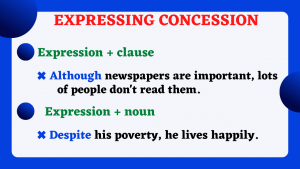
In expressing concession, we use expressions like although and but at the beginning of the clause which contrasts with the main clause.
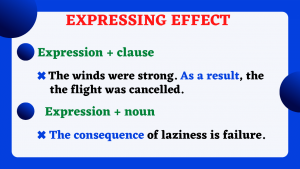
Expressing effect means talking about something that was caused by another thing; i.e., a change that is the result of an action or cause.

The term ‘’cause ‘’ refers to things that make other things happen. In expressing cause, we show the connections between causes and results.

The term “purpose” designates an aim you strive to achieve. In expressing purpose, we try to answer the question of why we do something.
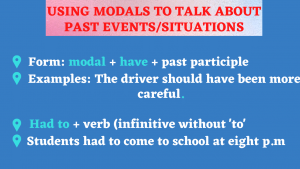
When using models to talk about the past, we refer to a past situation or an action that happened in the past but could no longer be changed.
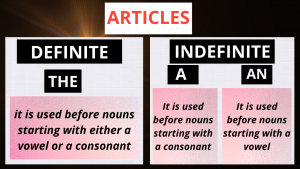
Definite and indefinite articles are parts of speech placed before nouns and noun phrases. They refer to determiners “the”, “a”, and “an”.
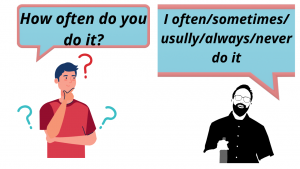
Adverbs of frequency answer the question of how often an action occurs and describe how something happens either in definite or indefinite.

Expressing equality means showing that no one has a value that is less or more than the other. I.e., they are the same or have the same values

The difference between expressing hopes and present wishes can sometimes be confusing and may even be challenging, at least for some students.

Conditional type 0 is used to talk about habits, general truths/realities,
scientific facts, or natural laws that happen in the present time.