
Learn English Easily, Quickly, and Professionally
Do you know that English is the most widely spoken language in the world and the language of business, science, and technology? So, no doubt, learning this language can open up doors to better jobs, career advancement, and the ability to communicate with people from all over the world.
Here are some other benefits of learning English:
- Access to a wider range of information and resources.
- Enhancement of travel experiences by being able to communicate with locals in popular tourist destinations that you may visit.
- An increase in cultural understanding of many popular books, movies, TV shows, songs, etc.
- boost in your self-confidence with a rewarding experience.
- Improvement of your cognitive abilities such as memory, problem-solving, and critical thinking, as studies have shown.
It is worth noting that the above-stated objectives can be achieved to a large extent if we learn the four basic skills of English: listening, speaking, reading, and writing.
Main English Lessons Categories
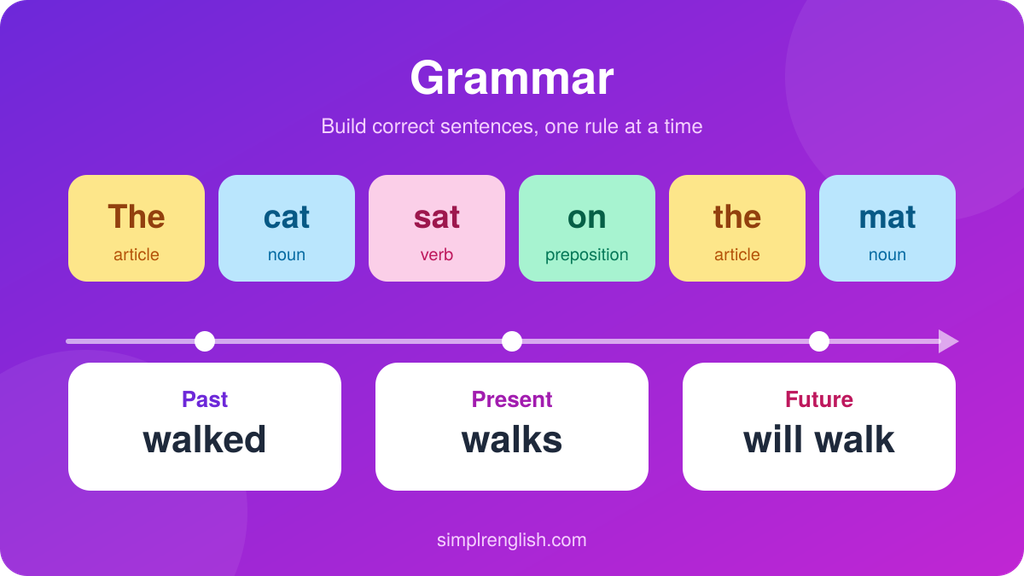
Good grammar helps you say exactly what you mean. Explore clear, step-by-step explanations of parts of speech, tenses, and sentence structure, with simple examples you can understand right away. Whether you’re just starting or polishing your English, this is the place to build a strong foundation.
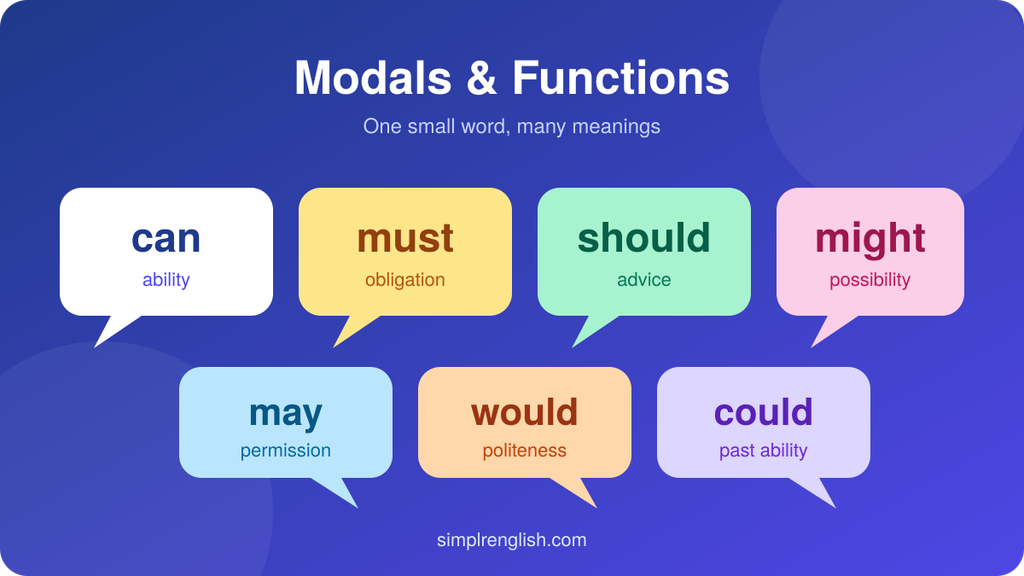
Can, must, should, might: these small words change the meaning of a sentence. Here you’ll learn what each modal verb does, from giving advice to asking politely or talking about ability and possibility, with clear examples and practice. Perfect for learners who want to sound natural and polite in everyday English.
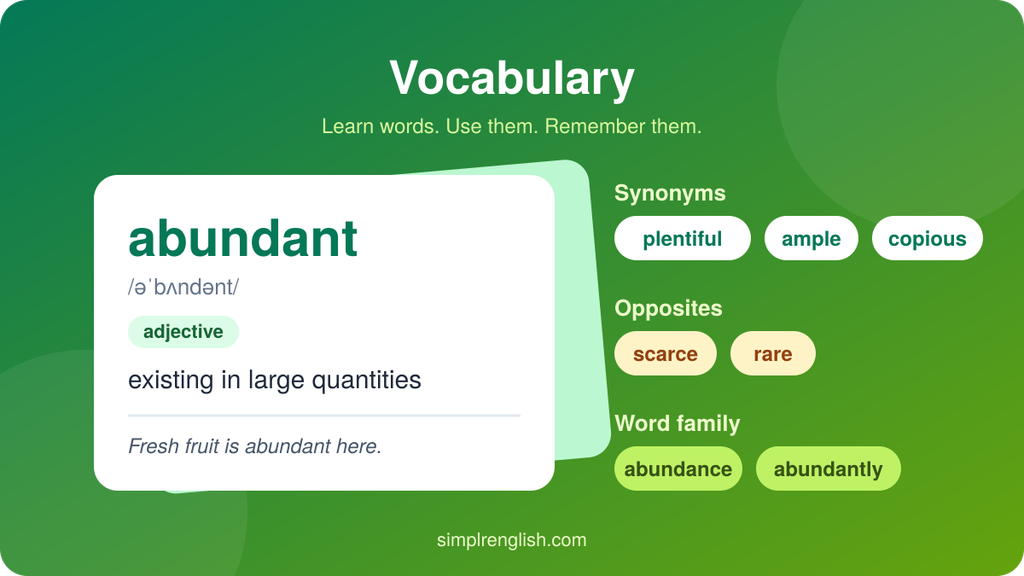
Words are the building blocks of English. Here you’ll learn new words with their meanings, pronunciation, example sentences, synonyms and opposites, so you can remember them and use them naturally. Build your vocabulary step by step, one useful word at a time.
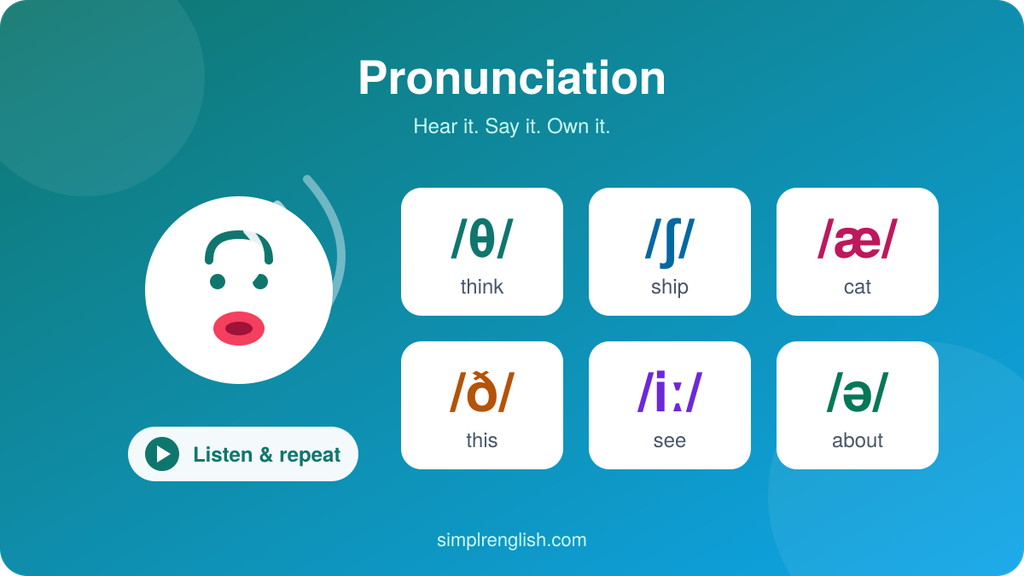
Speak English clearly and with confidence. This section helps you hear and practice sounds that are often tricky, such as the “th” in think and the “sh” in ship, with simple tips and example words. Listen, repeat, and notice the difference. Ideal for learners who want to be understood easily.
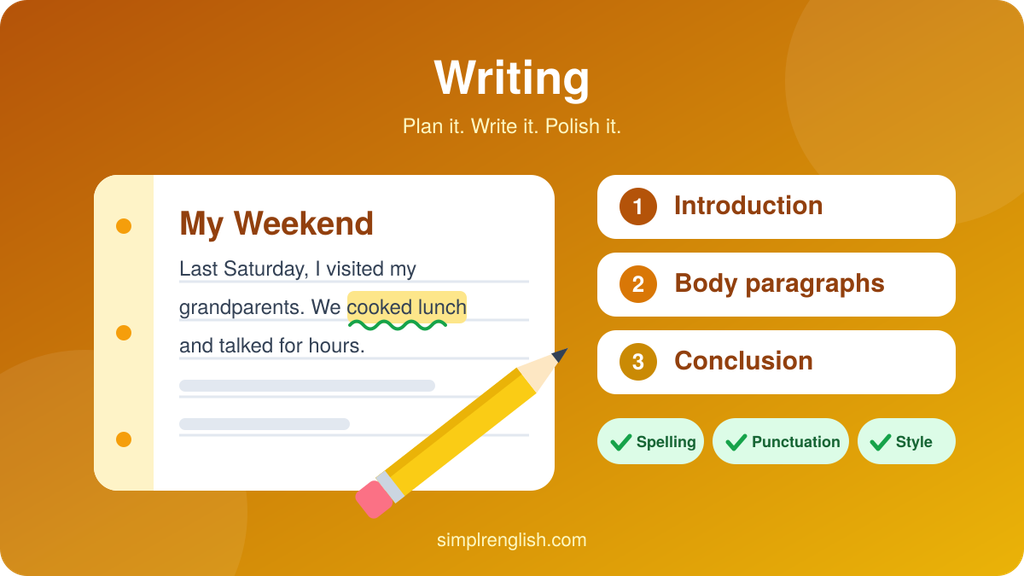
Turn your ideas into clear, well-organized English. Learn how to plan and structure emails, paragraphs, and essays, from a strong introduction to a confident conclusion, and how to check your spelling, punctuation, and style. Practice a little each day and watch your writing improve.
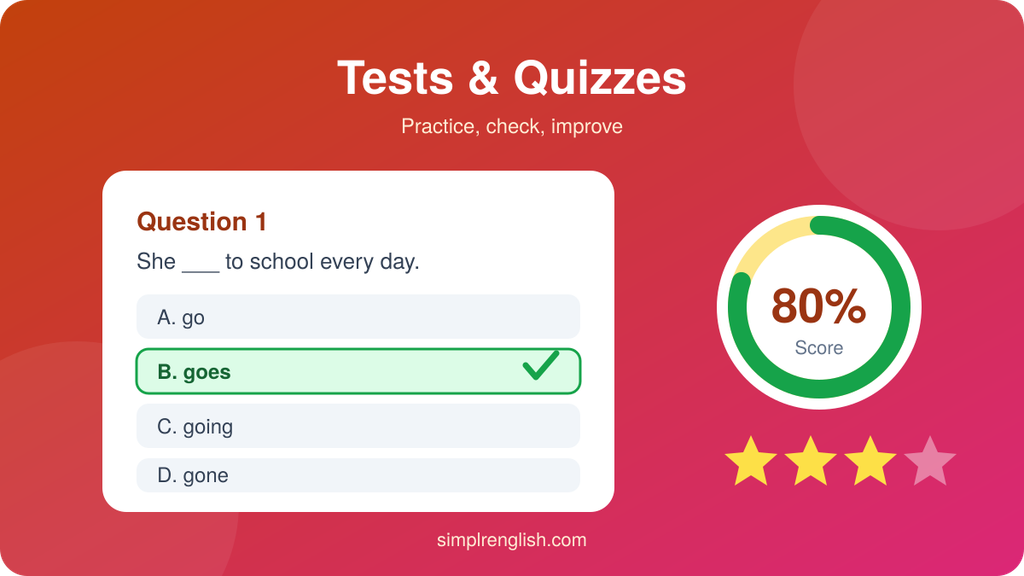
Check what you’ve learned and discover what to practice next. These quizzes cover grammar, vocabulary, and more, so you can learn from every mistake. Take them at your own pace and come back as often as you like to see how far you’ve come.
Recent Posts

Superlatives
Basic notes about superlative: Superlatives are forms of adjectives used to compare…

What Is Diabetes?

Nocturnal Animals

DESERT COTTONTAILS

IS THE INTERNET ANTI-SOCIAL?

Cold Cure
Our blog provides you with profound information about:
- Personal development
- Higher education
- Scholarships and financial aids
- Immigration
Most Popular Blog Posts

The Seven Habits of Highly Effective People

Revolutionizing Education With The Power Of AI

Personalized Learning In Education

How To Improve Your English Listening Skills

How To Improve Your English Speaking Skills

Developing English Reading Skills
Main Blog Categories
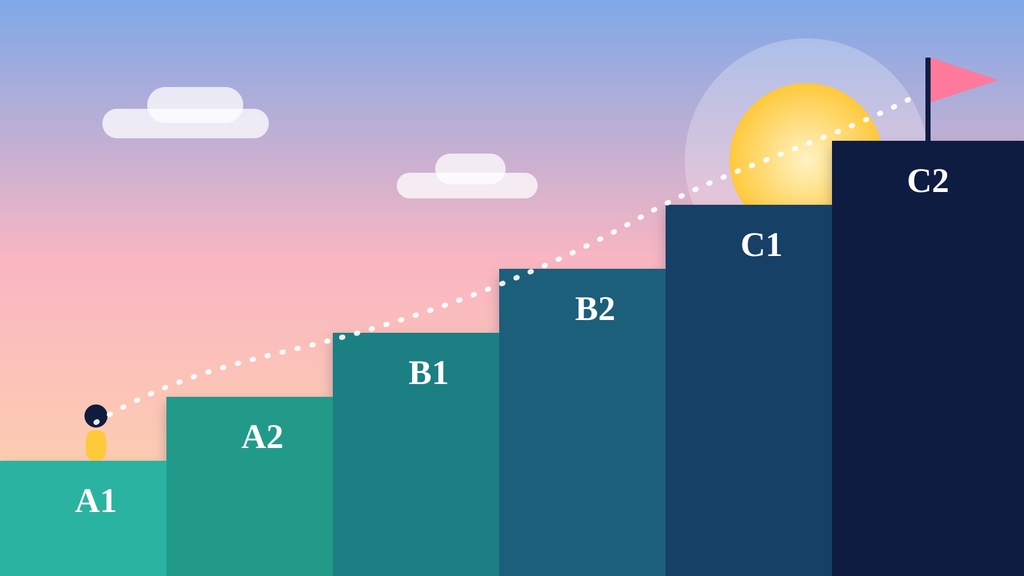
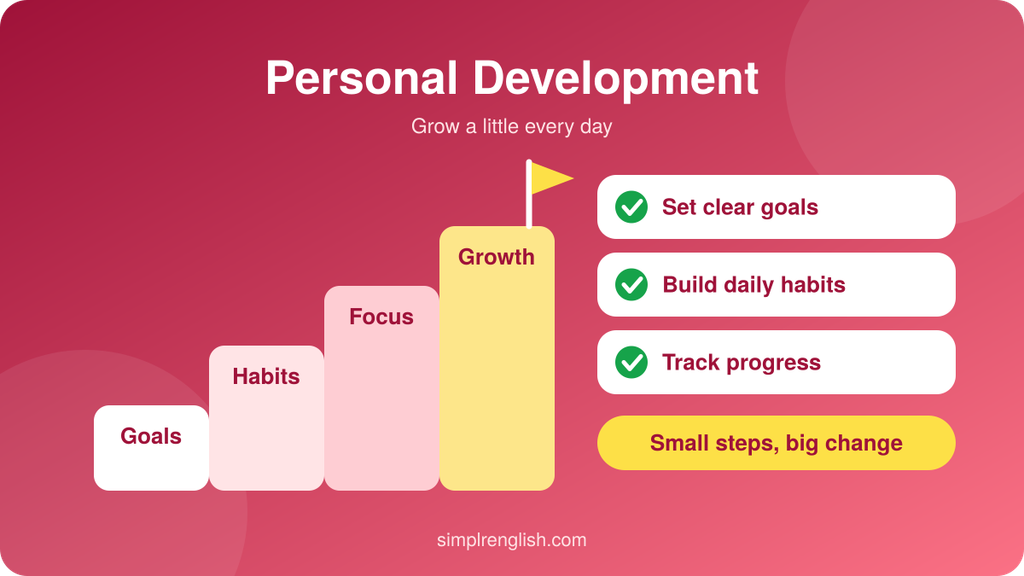
Learning English is a journey of growth. This section shares practical ideas for setting goals, building daily habits, staying focused, and tracking your progress, so you can keep learning with motivation and confidence. Small steps every day lead to big changes.
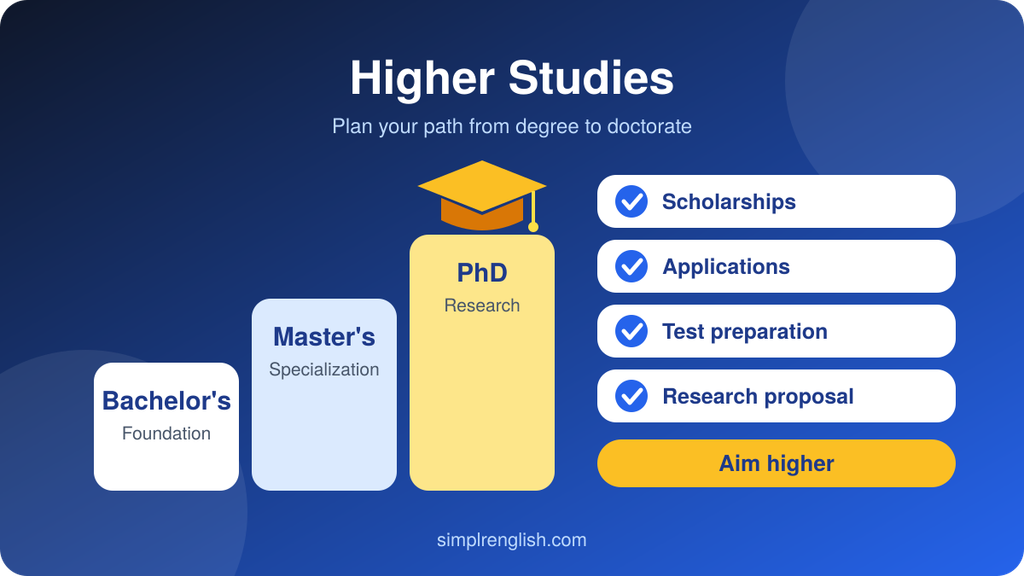
Dreaming of a university degree? Discover the English you need for higher education, from preparing for language tests to writing application essays and research proposals. Find tips to help you plan your path, from bachelor’s to master’s and PhD, and aim higher with confidence.
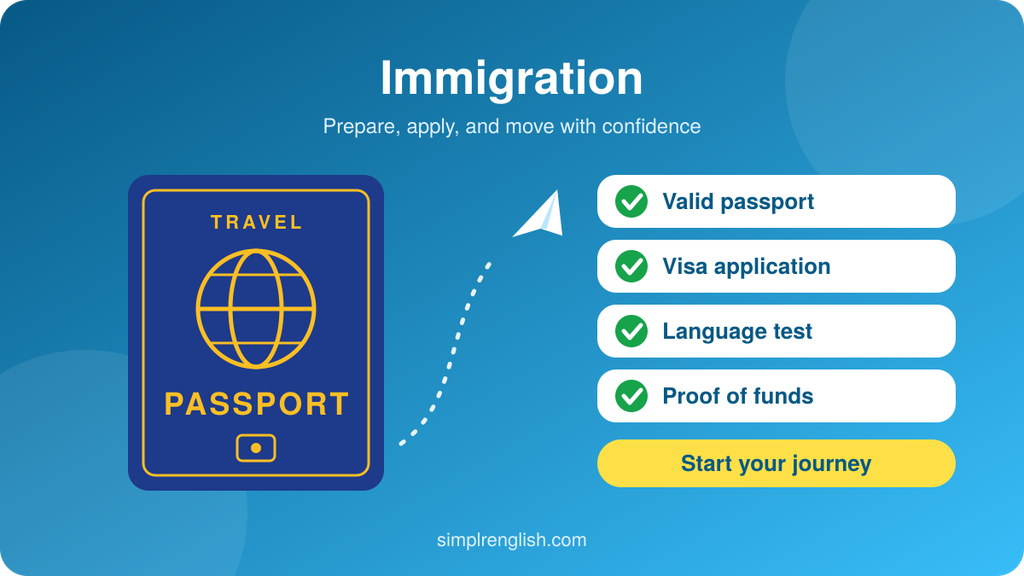
Moving to a new country starts with confident English. This section helps you prepare for the language side of the journey, such as language tests, forms, interviews, and everyday conversations. Always check official government websites for the latest requirements, as rules differ by country and can change.
Main Shop Categories
Products And Tools


